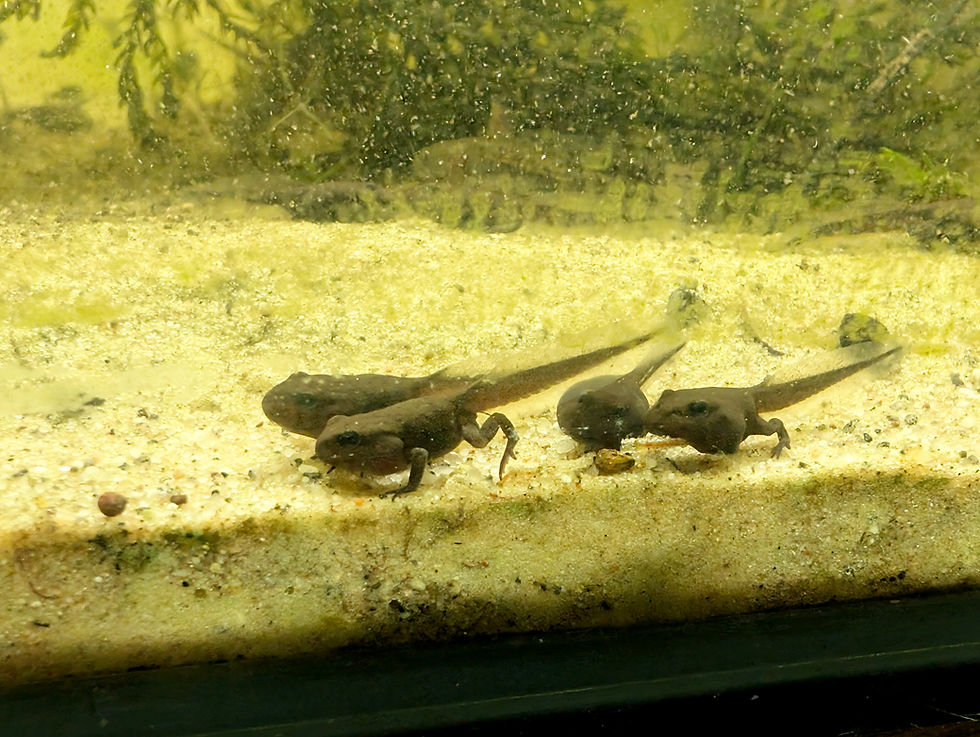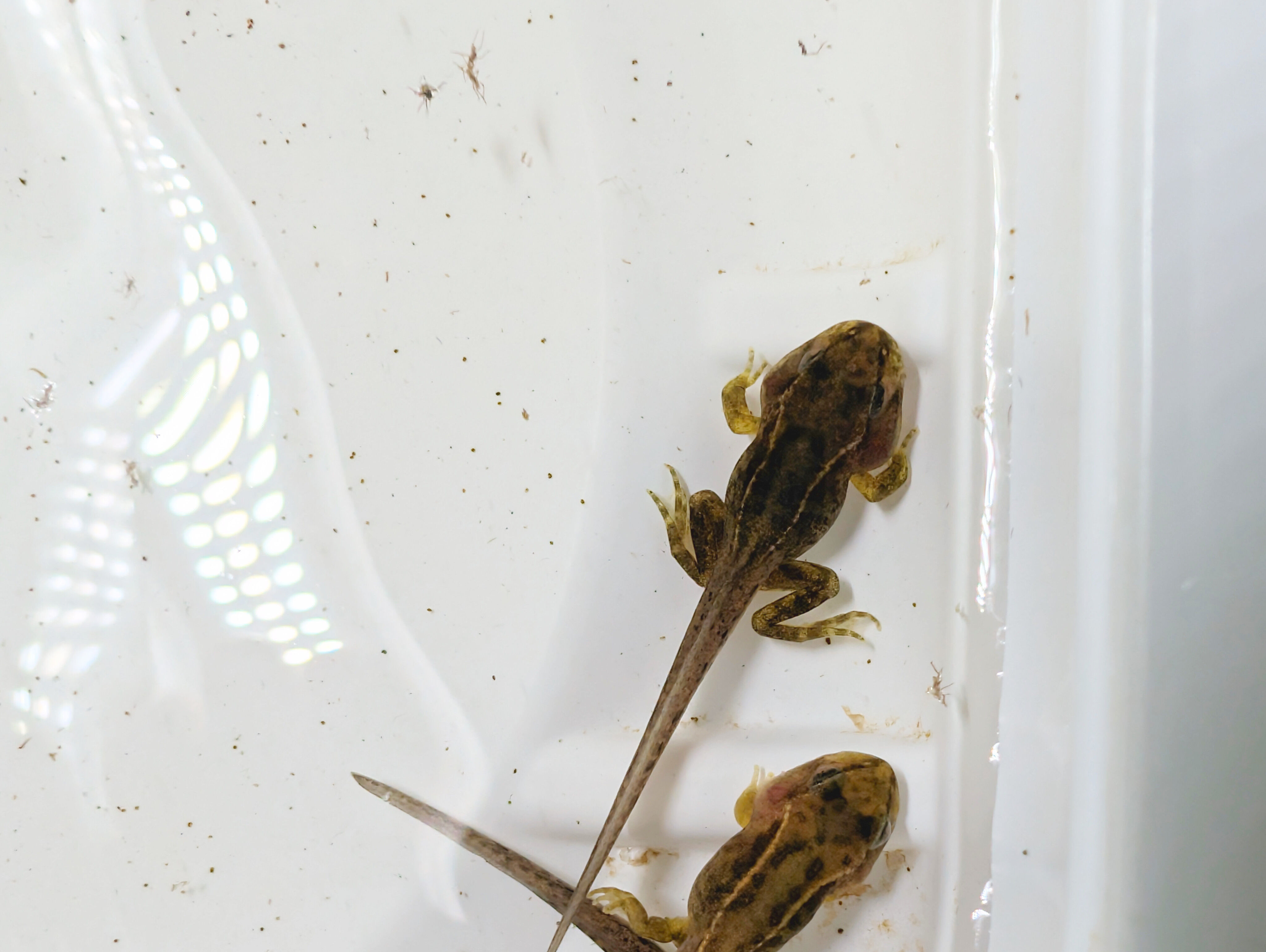

Well developed common frog tadpoles (cb2026 )
These tadpoles are well developed and have their 4 legs and are starting to absorb their tail, they will be fully terrestrial froglets in around a week, once they lose their tail froglets aren't great swimmers so a terrestrial set up with a small water dish is best.
Captive care
Common frogs are easy to care for in captivity,
A paludarium set up is best ,common frogs are mostly terrestrial except in the breeding season but spend a lot of time in or near water so a large water container for them to fully submerge is important ,a natural set up is best with a substrate of soil or coconut coir , lots of plants and moss ,some rocks or wood is also beneficial, we keep our amphibians in bioactive setups with lots of worms ,springtails ,woodlice and other insects living the soil ,these as well as helping keep the enclosures clean also provide a natural food source for the frogs.
Feeding 🐛
Common frogs will eat a wide range of foods
Almost any standard insects foods are suitable for froglets small foods are essential
Hatchling/ size 1 Crickets
Micro Mealworm
Micro wqxworms
White worm
Fruit flies
Aphids
Spring tails
While commonly stated frogs will eat snails and slugs these don't tend to be preferred.
As with all amphibians and reptiles in captivity common frogs require a calcium supplement in there diet ( dusted over there food ) to avoid getting metabolic bone disease ( MBD ) ,a supplement with both calcium and additional nutrients is best ,we use arkvits but there's many different suitable brands ,foods like calci worm and isopods are also an excellent source of calcium for the frogs.
Lighting 💡
UVB lighting is required for common frogs in captivity, UVB light facilitates the synthesis of Vitamin D3 in many reptiles and amphibians, which is crucial for calcium absorption, in the wild they will naturally bask in the sun and we see in our own frogs they spend considerably time basking under the UVB light ,a 5% UVB is sufficient for them.
Tank mates
While it's disputed by amphibian keepers if different species should be kept together ,there are some species that make suitable companions for the common frog , similar species like the pool or edible frog provided there of similar size and the enclosure is large enough for them to have there own space , these species are all found together in many parts of Europe , common toads are also suitable tank mates, they are almost always found together in the wild in very close proximity and will sometimes even hibernate together, just because certain species live together in the wild or in similar environments doesn't always mean there suitable to keep together in captivity but in this case both species do really well together and we've never had any problems in keeping them this way.
There are many different methods of keeping amphibians in captivity and different keepers and breeders have their own methods ,our advice is based on our own experience and what we've had the most success with in our own animals.